If you are reading this because someone you love was hurt or killed on the water near Boston, this post is written for you. Not for people who are casually curious about maritime law. For the person sitting with something heavy, trying to figure out whether what happened was preventable, whether anyone can be held responsible, and whether a lawyer can actually do anything at this point.
At Latti Associates, we represent victims and family members after serious boating accidents on Massachusetts waters. We know these cases, we know these waters, and we know what it takes to hold negligent operators and vessel owners accountable.
The Waters Around Boston Are Beautiful and Legitimately Dangerous
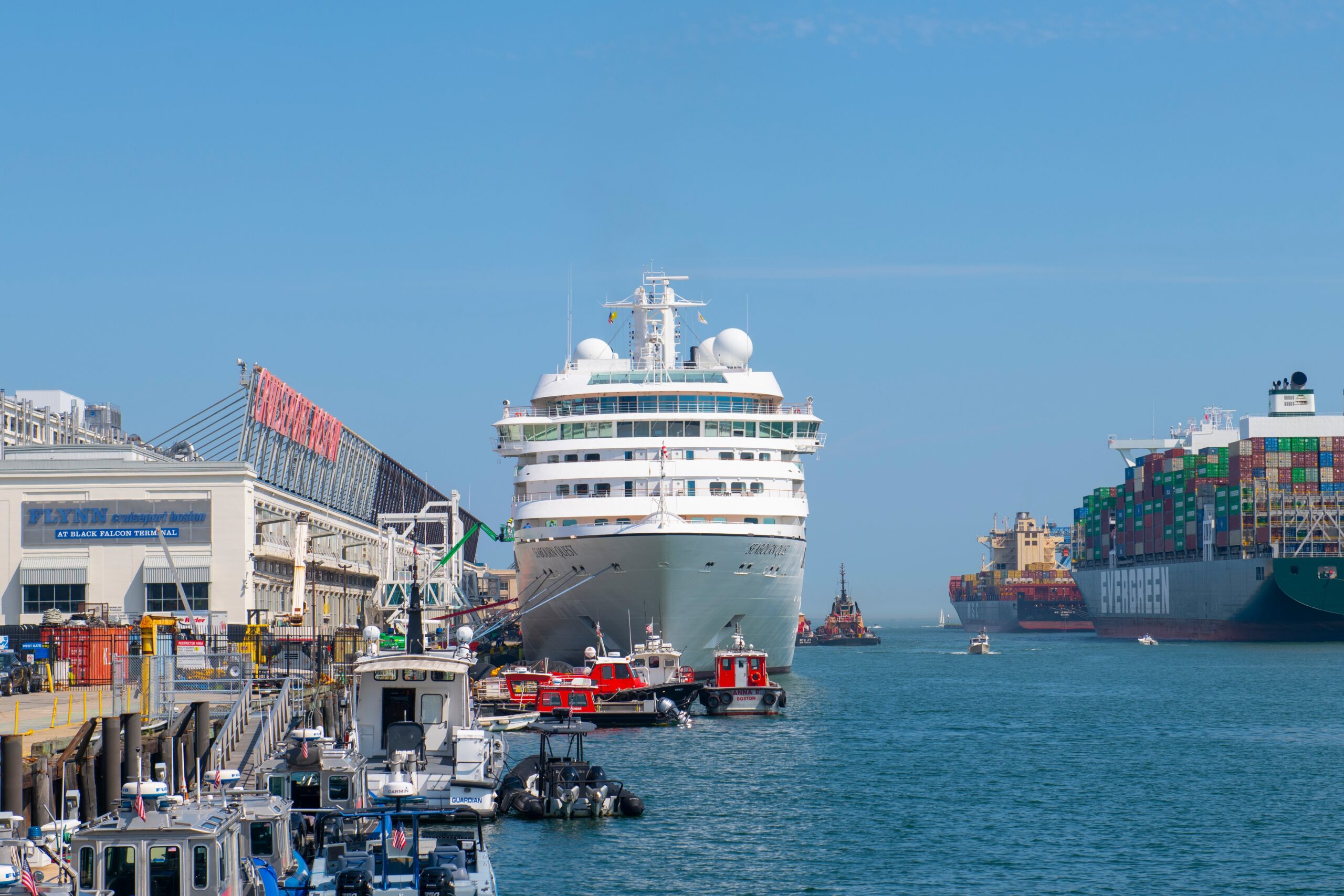
Massachusetts has some of the most heavily used recreational boating waters in the country. From Boston Harbor to the North Shore to Cape Cod, the combination of scenic coastline, summer tourism, and dense boat traffic creates conditions where accidents happen with troubling regularity.
High Traffic, Tight Channels, and Unpredictable Conditions
Boston Harbor alone sees thousands of recreational vessels during peak summer months, navigating alongside commercial ferries, fishing boats, and working vessels in channels that leave little room for error. The North Shore harbors at Gloucester, Marblehead, Salem, and Newburyport are similarly congested on summer weekends, with a mix of experienced boaters and seasonal operators who may be on the water just a few times a year.
Tight channels demand precise navigation. Wakes from larger vessels can destabilize smaller craft without warning. Fog rolls in off the Atlantic quickly and can reduce visibility to near zero within minutes. Tidal currents around the harbor islands and along the North Shore create conditions that surprise even experienced mariners. Add to that the reality that many recreational boaters are operating vessels far more powerful than their skill level warrants, and the risk profile of Massachusetts coastal waters becomes clear.
Operator Error and Alcohol: The Two Leading Causes of Recreational Boating Deaths
According to U.S. Coast Guard statistics, operator inattention and operator inexperience are consistently the top contributing factors in recreational boating accidents nationwide. Alcohol use is the leading known contributing factor in boating fatalities. Drunk boating is treated seriously under both Massachusetts law and federal maritime law, and a blood alcohol concentration at or above 0.08 percent on the water carries the same legal threshold as driving under the influence on land.
What these statistics reflect in practice is a pattern: accidents that were not inevitable. They happened because someone was not paying attention, was not qualified to operate the vessel they were on, or was impaired and chose to get behind the wheel anyway. That pattern is the foundation of legal liability, and it is what maritime attorneys look for when evaluating a case.
Seasonal Surges and the North Shore’s Specific Risk Profile
The months of June through August account for the overwhelming majority of recreational boating accidents in Massachusetts. Traffic surges, operator experience levels drop as casual summer boaters take to the water, and the combination of warm weather and social events means alcohol is more frequently involved. The Gloucester area and the waters off the North Shore see this pattern play out every season, as do the Cape Cod waters and the harbors of Boston’s inner and outer islands.
Case Example: What the NH2622SA Incident Reveals
The case number NH2622SA refers to a documented recreational boating accident report filed with state boating authorities. Because individual accident reports in the BARD system are not always publicly accessible in full detail, we must examine what cases of this type consistently reveal rather than referencing details that cannot be independently verified. What documented recreational boating cases in New England waters routinely show is instructive on its own.
What the Accident Report Shows
Recreational boating accident reports in the New England region consistently document a recognizable set of circumstances: collisions occurring during daylight hours in fair weather conditions, with operator error identified as a primary or contributing cause. They involve vessels that were properly registered and mechanically sound. They involve operators who were not intoxicated. And they still resulted in serious injury or death, because someone was not watching where they were going, was traveling at unsafe speed for the traffic conditions, or failed to yield the right of way.
This matters legally because it reframes the question families often ask first. They want to know whether someone was drunk or reckless. Sometimes the answer is yes. But negligence on the water does not require dramatic misconduct. It requires only that someone failed to exercise the level of care that a reasonably prudent operator would have exercised under the same circumstances. That standard captures a much wider range of conduct than most families initially realize.
Why Cases Like This One Are Preventable
Nearly every documented recreational boating fatality in Massachusetts waters involves at least one factor that could have been different. A lookout who was distracted. A speed that was appropriate for open water but not for a crowded harbor channel. A vessel operator who had not completed a boating safety course. An owner who allowed an inexperienced guest to take the helm. Preventability is not a legal conclusion, but it is the starting point for a liability analysis, and in case after case, it is where the facts lead.
What Investigators Look For After a Boating Accident in Massachusetts
When a serious boating accident occurs on Massachusetts waters, the investigation typically involves the Massachusetts Environmental Police, the U.S. Coast Guard, and potentially local harbor authorities. Investigators document vessel positions, collect witness statements, examine equipment condition, review operator credentials and training history, and where alcohol is suspected, conduct chemical testing. The resulting reports form the factual foundation of any civil legal claim.
What an experienced maritime attorney does is build on that foundation. Coast Guard and state reports document what happened. Legal investigation focuses on who is responsible and what evidence supports that conclusion.
What Legal Rights Do You Have After a Boating Injury or Death in Massachusetts?
Recreational Boaters and Passengers: Your Rights Are Real
Recreational boaters and their passengers have meaningful legal rights when they are injured through someone else’s negligence on the water. The fact that an accident happened on a boat rather than on a highway does not reduce the injured party’s right to compensation. Medical expenses, lost wages, pain and suffering, and long-term care costs are all recoverable in a maritime personal injury claim, subject to the applicable legal framework.
When Federal Maritime Law Applies and When State Law Does
This is where recreational boating cases get legally complex in ways that matter practically. Federal maritime law applies to accidents occurring on navigable waters, which generally means waters that are capable of supporting interstate or foreign commerce. Boston Harbor and the coastal waters of Massachusetts meet that standard. When federal maritime law applies, it governs the substantive rights of the parties, including in some cases the availability of certain damages and the applicable statute of limitations.
Massachusetts state law can also apply in recreational boating cases, and the interplay between the two frameworks requires careful analysis. An attorney who handles only land-based personal injury cases may not be familiar with how these frameworks interact, which is why representation from a firm with genuine maritime law experience matters.
The Jones Act and How It Affects Boating Cases Involving Workers
The Jones Act is a federal statute that provides specific protections for seamen injured in the course of their employment. In the recreational boating context, it typically applies to crew members and workers rather than passengers. If you or someone in your family was working on a vessel, whether as a hired captain, a deckhand, or in another capacity, the Jones Act may significantly expand the legal remedies available.
The distinction between a recreational passenger and a covered seaman under the Jones Act is a legal determination that depends on the specific facts of the employment relationship, and it is one of the first things a maritime attorney will evaluate.
Wrongful Death on the Water and What Families Need to Know
When a boating accident results in a fatality, the family’s legal options depend on which legal framework applies and the relationship of the surviving family members to the deceased. Federal maritime law provides a wrongful death remedy under the Death on the High Seas Act for deaths occurring beyond three nautical miles from shore. For deaths occurring in coastal and harbor waters, a combination of federal general maritime law and Massachusetts wrongful death statutes may apply.
Wrongful death claims on the water can recover compensation for the loss of financial support the deceased would have provided, loss of companionship and society, funeral and burial expenses, and in appropriate cases, the conscious pain and suffering experienced between the accident and death. Drowning cases and cases involving maritime deaths more broadly require a careful analysis of the evidence to establish what the deceased experienced and what the family’s full compensable losses include.
What to Do If You or Someone You Love Was Hurt or Killed in a Boating Accident
Document Everything — Even If You Think You Can’t
In the immediate aftermath of a serious boating accident, most families are not thinking about evidence. They are thinking about their loved one. But to the extent you can, preserving documentation matters. Photographs of the scene, the vessels involved, and any visible injuries should be taken as soon as possible. Witness contact information should be collected. Any communications from the vessel owner, their insurance company, or their attorney should be saved and not responded to without legal counsel.
Official accident reports filed with the Massachusetts Environmental Police or the Coast Guard are public records that can be obtained later. But physical evidence, witness memories, and electronic data from vessel navigation systems begin to degrade or disappear quickly. The sooner an attorney is involved, the more of that evidence can be preserved.
Do Not Accept a Settlement Before Talking to a Maritime Attorney
Vessel owners and their insurers sometimes move quickly after a serious accident to make contact with injured parties or grieving families. Early settlement offers can seem like relief in an overwhelming moment. They are almost never adequate compensation for the full scope of a serious maritime injury or wrongful death. Accepting a settlement and signing a release extinguishes all future claims permanently, regardless of costs that emerge later. Do not sign anything before speaking with a maritime attorney.
How Latti Associates Investigates Boating Accidents
How Latti Associates investigates an accident begins with the evidence that already exists and builds from there. Every case involves a thorough, methodical process:
- Accident reports, Coast Guard records, and any available vessel data are obtained and reviewed
- Witnesses are identified and interviewed while memories are still fresh
- Maritime experts are brought in to reconstruct the sequence of events and establish what a competent operator would have done differently
- The full range of potentially responsible parties is evaluated, including the vessel operator, the vessel owner, and where applicable, equipment manufacturers or charter companies
- Every step is guided by a clear understanding of which legal framework applies and what it means for your family’s recovery
Why Families in the Boston Area Trust Latti Associates With These Cases
Latti Associates is a Boston maritime law firm. We are not a general personal injury practice that handles occasional boat cases. Maritime law is what we do, and the waters around Boston, the North Shore, and Cape Cod are the waters we know. Recreational boating accidents are among the cases we handle regularly, alongside commercial maritime injuries, Jones Act claims, and wrongful death cases involving every type of vessel and every type of water.
Families who have lost someone in a boating accident near Boston do not need a firm that will learn maritime law on the job. They need a firm that already knows it, knows the local waters and the applicable legal standards, and knows how to build a case that accurately reflects what their family lost.If someone in your family was injured or killed in a boating accident on Massachusetts waters, we would welcome the conversation. Contact us today at (617) 523-1000 to schedule your free, confidential consultation. There is no obligation and no cost to speak with our team.