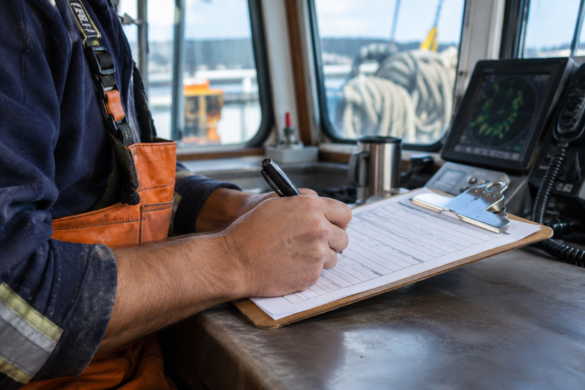
If you were hurt on a vessel, the company accident report you fill out may be one of the most important pieces of paper in your case. Keep in mind who wrote the form: the company. Many of these forms are designed to protect the employer, not you. A few simple steps can make sure your report tells the true story.
Talk to a Maritime Injury Attorney Before You Fill It Out
Tell your supervisor you were hurt right away. That is important. But reporting your injury is not the same as filling out and signing a written company form on the spot.
Before you complete or sign the accident report, talk to a maritime injury attorney. A lawyer can review the form with you and point out questions that are worded to hurt your claim. And never fill out a report while you are in severe pain or on medication that clouds your thinking. If you can’t think straight, it can wait.
Tell the Truth and Keep Your Accident Report Short
Write what actually happened, in plain words. You don’t need a long story. Short, true, and to the point is best.
Don’t guess. If you aren’t sure of a time or detail, say it is approximate or that you don’t know.
Don’t downplay how badly you are hurt, and don’t exaggerate it either. The truth is your best protection.
What to Include in a Maritime Injury Accident Report
Focus on three things:
- What hurts. List every part of your body that was injured and your symptoms, such as pain, swelling, numbness, or dizziness. Some injuries get worse over the next few days, so don’t leave anything out.
- What happened. Give the date, time, location on the vessel, the job you were doing, and who was there.
- What caused it. Describe the condition that led to your injury: broken or faulty piece of equipment, lack of equipment, lack of safety procedures and/or equipment, inadequate or lack of training, improper supervision to not enough crew.
You don’t have to decide who was at fault. Just describe the conditions you saw. Don’t hold back on the cause because you are worried about getting someone else in trouble. Describing what really happened is not blaming anyone. It is the truth, and you need to protect yourself.
Watch Out for Pre-Filled Boxes on Company Accident Reports
Many company forms include checkboxes like “all equipment was working properly,” “vessel was seaworthy,” “proper safety gear was provided,” or “I was following procedure.” Read every one carefully. If a statement isn’t true, don’t check it.
Never sign a blank form or one you haven’t read. If someone else filled it out and something is wrong, correct it. If there isn’t enough room, attach a signed and dated statement.
If you leave any part of the form blank, put a line through the blank so nothing can be filled in later by someone else.
Always keep a copy of whatever you fill out. If the company won’t give you a copy, take a photo with your phone.
Document Your Maritime Injury With Photographs and Witnesses
Conditions on a vessel change fast. Equipment gets fixed, and evidence disappears. If it is safe, take photos and video of the area and equipment involved, along with your injuries, as soon as you can. Don’t move, repair, or take company equipment.
Send the photos to an email or another person so you always have them.
Write down the names and phone numbers of anyone who saw what happened.
Be Careful What You Post, Text, and Type After a Maritime Accident
If your case goes to court, the insurance company’s lawyers can ask for almost anything you have written about your accident or injury. Assume they will see it.
- Don’t post on social media. Skip posts, photos, check-ins, and comments about the accident, your injuries, or your activities. A single photo of you smiling at a barbecue can be used to argue you aren’t really hurt. Making your account private does not make it safe.
- Don’t ask AI chatbots about your injury. Typing questions into ChatGPT or other AI tools about what caused your accident or who was at fault creates a written record. Those conversations are not protected like talks with your attorney, and they may be requested in a lawsuit.
- Don’t text back and forth about it. Texts and messages with coworkers, friends, or family about the accident can all be discoverable. A casual comment or a guess about what happened can be twisted later.
And don’t delete anything you have already posted or sent. Deleting evidence can cause serious problems for your case. Talk to your attorney first. The only safe person to discuss the details of your injury with is your lawyer.
Protect Yourself After a Maritime Injury
The company has people looking out for its interests. You should too. Keep copies of your report, photos, medical records, and any texts or emails about the accident. If your symptoms get worse, get medical care and let your employer know in writing.
Injured? Talk to us before you sign anything. Contact Latti Associates LLC to speak with our experienced maritime injury team.