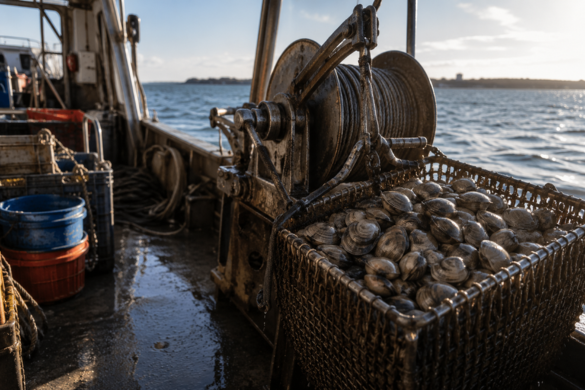
Working as a commercial clammer is physically demanding, unpredictable, and often dangerous. Long days on the water, shifting weather, heavy equipment, and lifting create risks that most land-based jobs never face. When someone gets hurt while harvesting clams, the first question is often simple: What happens now?
Commercial clammers qualify as seamen under maritime law, which means they have legal rights that go far beyond a standard workers’ compensation claim.
Whether you work aboard a clam boat in New Bedford, Cape May, Point Pleasant, Chincoteague, or another East Coast fishing port, the laws protecting maritime workers are different from those that apply on land.
The Jones Act Covers More Than Dramatic Accidents
Many people do not know that different laws apply for workers who are injured on the water and have never heard of the Jones Act or general maritime law. The Jones Act and general maritime law provide the legal framework for bringing claims when a person is injured on the water.
A clammer may be injured because the dredge and equipment wasn’t maintained, the deck became slippery, equipment failed, or the crew worked through unsafe conditions.
If employer negligence played any part in what happened, the Jones Act allows you to recover compensation for past and future lost income, future medical expenses, past and future pain and suffering and mental anguish, and the long-term impact the injury has on your ability to continue working on the water.
When an Unsafe Vessel Becomes Part of the Case
Not every maritime injury is caused by a careless coworker or a bad decision made on a single day. Sometimes the vessel itself becomes the issue.
Where a piece of equipment, even crew is considered part of equipment, is not reasonably fit for its intended purpose, that is unseaworthiness. An example of unseaworthiness is when cable, wire, rope snaps in half and injures a crew member. If the cable on the dredges fails and crushes a crew member’s hand, that would be unseaworthiness. Under general maritime law, the injured crew member has a claim for damages under unseaworthiness as a result of the failed cable. seaeMissing safety equipment, failing hydraulic systems, unstable work areas, damaged ladders, worn cables, defective winches, or inadequate crew training can all create conditions that make a clam boat unreasonably dangerous. Under maritime law, these situations may support what’s known as an unseaworthiness claim alongside other legal claims.
Looking at the vessel’s maintenance history often tells a much bigger story than the accident report alone.
Common Injuries Commercial Clammers Face
The work changes with the season, the tides, and the equipment being used, but certain injuries appear again and again throughout the commercial shellfishing industry.
Some of the most common include:
- Back and neck injuries
- Shoulder injuries
- Hand and finger crush injuries
- Falls on wet or uneven decks
- Entanglement injuries causing fractures and amputations
These injuries do not happen because fishing is inherently dangerous. They happen because equipment was poorly maintained, hazards were ignored, or safety procedures were not followed.
Maintenance and Cure is Owed Regardless of Fault
One of the biggest differences between maritime law and traditional workplace injury claims is something called maintenance and cure. If you qualify as a seaman and are injured you are entitled to these benefits. A seaman injured during the course of his employment is entitled to maintenance and cure regardless of how the incident and what the cause was. .
Maintenance helps pay for everyday basic living expenses and cure covers the costs of reasonable medical treatment. Both maintenance and cure continue until you have reached maximum medical improvement.
Why Experience Matters in Maritime Injury Cases
Maritime law isn’t simply another area of personal injury law. The rules that apply to commercial fishing vessels are different from ordinary workplace accidents, and large vessel owners, insurance companies, and commercial operators have significant resources behind them.
Latti Associates LLC has spent more than 60 years representing injured seamen, fishermen, and maritime workers. With offices in Boston and New Bedford and a nationwide maritime practice, our firm has gone up against major corporations, vessel owners, and maritime employers across the country.
Every case is prepared with the expectation that it could end up in court. Carolyn Latti personally oversees every matter from the initial investigation through litigation, building each case with detailed evidence and a strategy designed to withstand aggressive defenses.
Talk With Latti Associates About a Clammer Injury
If you were injured while working aboard a clam boat or another commercial fishing vessel, your options may be broader than you realize. Maritime claims often involve the Jones Act, unseaworthiness, doctrine of maintenance and cure, and other legal protections that don’t exist in ordinary workplace injury cases.
Latti Associates LLC has built its reputation representing maritime workers throughout the East Coast and across the country. If you have questions about an injury sustained while commercial clamming, our team is ready to review your situation, explain how maritime law applies, and pursue the compensation you deserve.